What Are the FAA Requirements for Hot Air Balloons?
Ever wondered what it takes to turn your dream of soaring over Sedona in a massive balloon into a real-life adventure? Long before the burners fire up, detailed guidelines shape every moment and are crafted for your well-being. The FAA requirements for hot air balloons create the framework that keeps these flights as safe as they are awe-inspiring, ensuring every rider can enjoy the wonder of flight with confidence.
What is the FAA, and How Does It Govern Ballooning?
The Federal Aviation Administration (FAA) is a United States government agency responsible for regulating all aspects of civil aviation. This includes everything from massive commercial airliners to those beautiful, buoyant balloons.
The FAA sets the standards for pilot certification, aircraft maintenance, and flight operations to maintain safety across the national airspace. These regulations fit the unique characteristics of lighter-than-air flight, providing a structured approach to safety without compromising the spirit of adventure.
Pilot Certification: The Heart of a Safe Flight
Your pilot is your expert guide in the sky, and the FAA has strict criteria they must meet. Under FAA Part 61, pilots must earn a specific certificate to fly a hot air balloon.
- Student Pilot Certificate: The journey begins here, allowing aspiring pilots to train under the supervision of a certified instructor.
- Private Pilot Certificate (Lighter-Than-Air): After logging sufficient flight hours and passing written and practical exams, a pilot can earn a private certificate. This allows them to fly with passengers, but not for compensation.
- Commercial Pilot Certificate (Lighter-Than-Air): This is the certification required for pilots at tour companies like Northern Light Balloon Expeditions. Earning this advanced rating demands more flight experience, deeper knowledge of weather and regulations, and a higher level of precision.
Commercial balloon ride pilots must also hold a current 2nd class medical certificate, verifying they are physically and mentally fit to fly. This commitment to pilot proficiency is the foundation of a safe and enjoyable flight over the Sedona landscape.

Aircraft Airworthiness: Keeping Balloons in Top Condition
A hot air balloon is a federally registered aircraft, just like a plane. Each balloon has a unique registration number (an "N-number") and must have an Airworthiness Certificate issued by the FAA. This certificate confirms that the manufacturer of the balloon used federally approved manufacturing standards.
To maintain that certificate, balloons must undergo regular inspections. Balloons follow the exact 100-hour inspection rule for airplanes..
Additionally, there is a mandatory annual inspection performed by an FAA-certified repair station. During this process, every component, from the fabric of the envelope to the basket, burners, and fuel lines, is meticulously examined for wear and tear.
We maintain our balloons at Northern Light Balloon Expeditions to the highest standards and in accordance with FAA requirements. Our operation emphasizes following industry best practices to keep every flight safe, comfortable, and memorable. Therefore, our equipment is ready for your adventure with our Arizona hot air balloons.
Part 91: The Rules of the Sky for Balloons
FAA Part 91 contains the general operating and flight rules for all aircraft. Balloons have specific guidelines within this framework that dictate how they can operate safely.
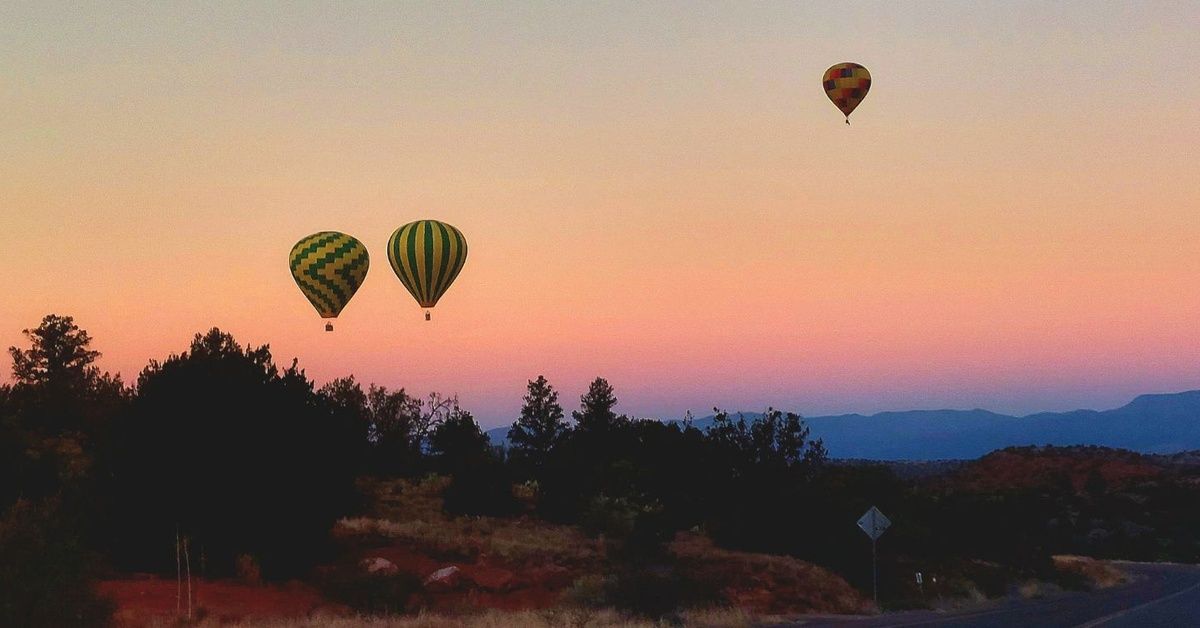
- Daylight Operations: The FAA restricts hot air balloon flights to daylight hours, from sunrise to sunset. This is one of the reasons our tours take place in the magical light of early morning.
- Visual Flight Rules (VFR): Balloons must fly in weather clear enough for the pilot to see and avoid obstacles and other aircraft. This includes specific visibility and cloud clearance minimums.
- Right-of-Way: Balloons have the right-of-way over all other engine-driven aircraft. Because a balloon travels with the wind and has no direct steering, other pilots are required to yield to them.
- Altitude and Clearance: Pilots must maintain a minimum safe altitude, which generally means staying at least 500 feet away from any person, vessel, vehicle, or structure on the ground, except during takeoff and landing. Over congested areas, this increases to 1,000 feet above the highest obstacle.

Weather and Pre-Flight Decision Making
Mother Nature is always in charge of a balloon flight. The pilot’s most critical responsibility is making the go/no-go decision based on weather.
FAA regulations require pilots to be familiar with all available weather information for a planned flight. This includes wind speeds at the surface and at various altitudes, visibility, and any potential for storms. Flights are typically canceled if winds are too strong or moving in an undesirable direction for a safe launch, flight, and landing.
Our experienced pilots are masters at reading Sedona’s unique microclimates through the FAA Flight Service as well as other weather forecasting models. They draw on decades of local knowledge to interpret weather patterns.
If Flight Service predicts strong wind shears or any unsafe conditions for the morning, flights are promptly canceled, no matter what other sources may suggest. This extra layer of precaution reflects our commitment to your safety and comfort.
Passenger Safety and Onboard Equipment
Your safety is our priority from the moment you arrive. Before you climb into the basket, your pilot will provide a comprehensive pre-flight safety briefing. This covers everything you need to know, including:
- How to properly position yourself for landing.
- Instructions for getting into and out of the basket safely.
- The importance of securing loose items like phones and cameras.
FAA regulations also mandate that certain equipment be on board. This includes an adequate supply of fuel, an altimeter to show altitude, and a variometer (or vertical speed indicator) to show the rate of ascent or descent.
At Northern Light Balloon Expeditions, we take pride in meeting and exceeding every regulation. Our family’s legacy is built on sharing the wonder of ballooning with the utmost attention to safety.
From our commercially certified pilots to our meticulously maintained equipment, every detail is managed so you can relax and soak in the incredible views. When you fly with us, you are flying with a family business that has the longest flying record of any balloon company in Arizona.
We handle all the technical details so you can focus on the adventure. Understanding the FAA requirements for hot air balloons should give you confidence in the professionalism and safety that underpins this amazing experience.